
Injectable vs Oral Steroids: A Complete UK Comparison
Injectable vs oral steroids: which is harder on the liver, which affects cholesterol more and what are the hidden risks of injecting? A clear, honest UK comparison of both forms.
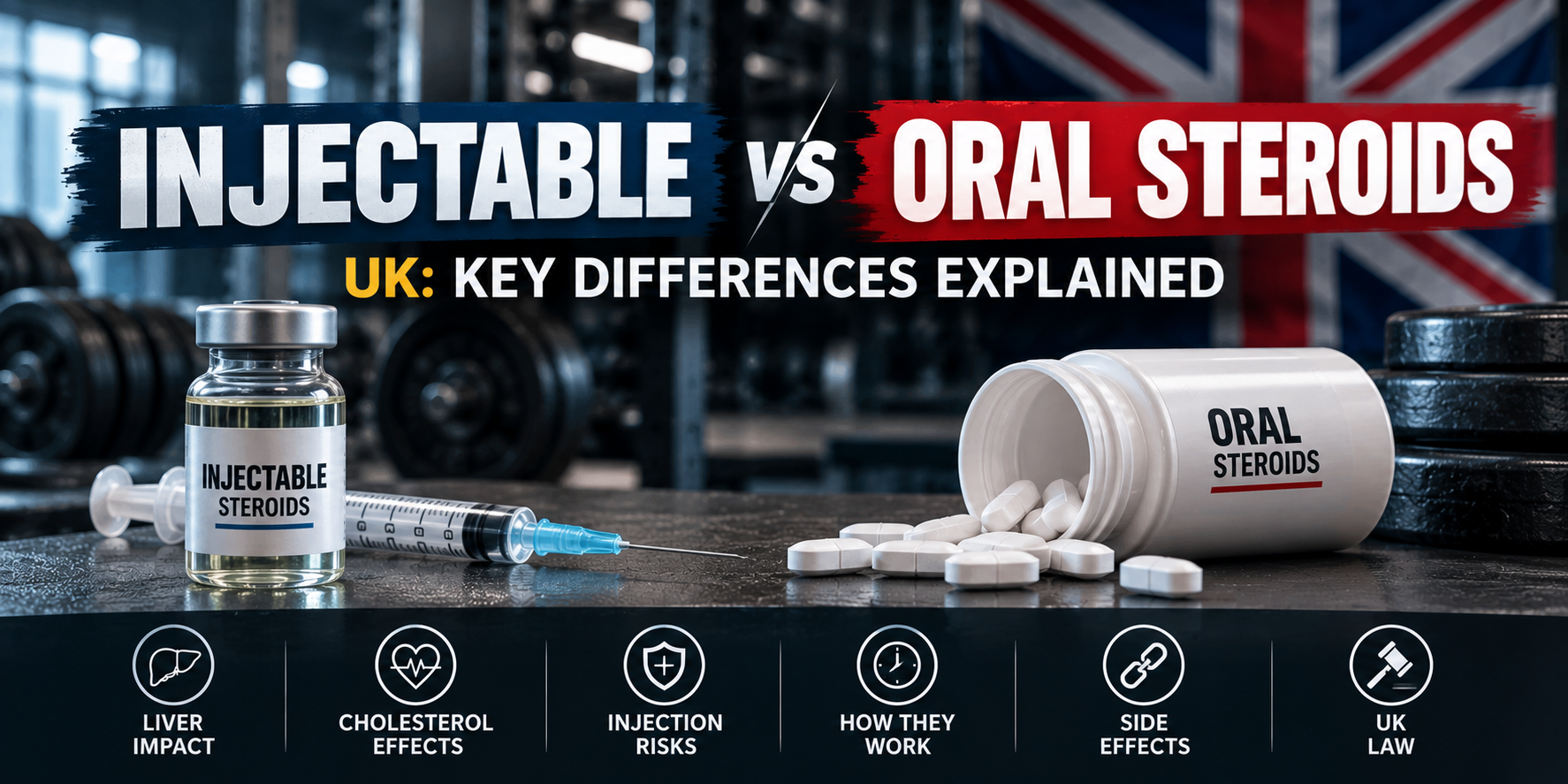
One of the first questions people ask when researching anabolic steroids is whether tablets or injections are “better”. Online forums are full of strong opinions on both sides, but the reality is more nuanced. Oral and injectable steroids work in different ways, reach the bloodstream through different routes and carry different risks.
This guide explains the difference between injectable vs oral steroids in plain English. It covers how each form works, how they affect the liver, cholesterol and hormones, the specific dangers of injecting, how long each stays in the body and what UK law says, so you can understand the full picture rather than relying on gym myths.
Key Takeaways
- Oral steroids are taken as tablets and pass through the liver first, which makes most of them harder on the liver.
- Injectable steroids go into a muscle and are released into the bloodstream slowly, avoiding that first pass through the liver.
- Oral steroids tend to have a bigger impact on cholesterol, especially HDL, often called good cholesterol.
- Injecting carries its own serious risks, including infection, abscesses, nerve damage and blood borne viruses.
- Both forms suppress natural testosterone. Neither is free from hormonal side effects.
- “Safer” depends on the compound, the person and how it is used, not simply on whether it is a tablet or an injection.
Injectable vs Oral Steroids at a Glance
|
Factor |
Oral Steroids |
Injectable Steroids |
|
How they are taken |
Tablets or capsules swallowed by mouth |
Injected into a muscle |
|
Route into the body |
Absorbed through the gut, then processed by the liver |
Released slowly from the muscle into the bloodstream |
|
Liver strain |
Generally higher, especially with chemically modified compounds |
Generally lower for most compounds |
|
Effect on cholesterol |
Often a larger drop in HDL (good cholesterol) |
Usually a smaller impact, though still present |
|
How quickly they act |
Usually faster |
Depends on the ester, often slower to build up |
|
How long they stay in the body |
Usually hours |
Days to weeks, depending on the ester |
|
Injection risks |
None |
Infection, abscesses, nerve damage, blood borne viruses |
|
Hormone suppression |
Yes |
Yes |
|
Water retention |
Varies, high with some compounds |
Varies, high with some compounds |
This table is a general guide only. Individual compounds within each group behave very differently, and the sections below explain why.
What Are Oral Steroids?
Oral steroids are anabolic steroids taken by mouth as tablets or capsules. Once swallowed, they are absorbed through the digestive system and travel straight to the liver before reaching the rest of the body. This is known as first pass metabolism.
The liver normally breaks down hormones very efficiently. To stop it destroying an oral steroid before it has any effect, most oral compounds are chemically modified. The most common change is called 17 alpha alkylation. It allows the compound to survive the liver, but it is also the main reason oral steroids are associated with liver strain.
Well known oral steroids include:
- Anavar (Oxandrolone), often described as one of the milder compounds, such as Pharmaqo Anavar 10mg
- Winstrol (Stanozolol), also available in tablet form, such as Pharmaqo Winstrol 10mg
- Dianabol (Methandrostenolone), such as Pharmaqo Dianabol 10mg
- Anadrol (Oxymetholone), one of the most liver toxic compounds, such as Pharmaqo Anadrol 50mg
- Turinabol, such as Pharmaqo Turinabol 10mg
Oral steroids usually act quickly and leave the body within hours to a day or so. This is why they are often taken more than once a day, and why their effects, and some of their side effects, can fade relatively quickly after stopping.
Not every oral compound is chemically modified in this way. Pharmaqo Proviron 25mg, for example, is an oral androgen that is not 17 alpha alkylated, which is why it is generally considered less harsh on the liver than most oral steroids, although it still has hormonal effects.
What Are Injectable Steroids?
Injectable steroids are usually dissolved in a carrier oil and injected into a large muscle, such as the glute or thigh. From there, the hormone is released slowly into the bloodstream over days or weeks.
The speed of release is controlled by something called an ester, a chemical chain attached to the hormone. Short esters release quickly and leave the body sooner. Long esters release slowly and can stay active for weeks. For example:
- Testosterone Propionate has a short ester, such as Pharmaqo Testosterone-P 100mg/ml
- Sustanon is a blend of four testosterone esters, short and long, such as Pharmaqo Sustanon 250mg/ml
- Nandrolone Phenylpropionate uses a shorter ester, such as Pharmaqo Nandrolone-P 100
- Primobolan Depot (Methenolone Enanthate) uses a longer ester, such as Pharmaqo Primobolan Depot 100mg
- Drostanolone Enanthate, often known as Masteron, such as Pharmaqo Drostanolone E-200
Because injectable steroids enter the bloodstream directly from the muscle, they avoid the first pass through the liver. Most do not need the chemical modification that makes oral compounds harsh on the liver. This is the main reason injectables are generally considered less damaging to the liver.
Injectable Versions of Oral Compounds
Not every injectable is easy on the liver. Some compounds usually taken as tablets are also made in injectable form, such as Pharmaqo Dianabolan 50 mg/mL, an injectable form of Dianabol. Winstrol is also widely made as an injection.
These compounds often keep the same 17 alpha alkyl structure as their tablet versions. That means injecting them does not remove the liver strain. It simply changes how they get into the body. This is an important detail that many guides leave out.
Oral Steroids and Liver Damage
Liver strain is the biggest difference between oral and injectable steroids, and oral steroids liver damage is one of the most searched topics in this area.
Because 17 alpha alkylated compounds resist being broken down, they keep putting pressure on the liver throughout use. Possible effects include:
- Raised liver enzymes, a sign that liver cells are under stress, often seen on blood tests
- Cholestasis, where the flow of bile is blocked, causing itching, dark urine and yellowing of the skin or eyes
- Peliosis hepatis, a rare but serious condition where blood filled cysts form in the liver
- Liver tumours, linked to long term, high level use of oral compounds
The risk is generally highest with compounds such as Anadrol and Dianabol and with longer periods of use. Alcohol, paracetamol overuse, other medicines processed by the liver and existing liver conditions all add to the strain.
Warning signs that need prompt medical attention include yellowing of the skin or eyes, dark urine, pale stools, persistent itching and pain in the upper right side of the abdomen. Our guide to steroid side effects covers liver warning signs in more detail.
Effects on Cholesterol and the Heart
Both oral and injectable steroids can affect cholesterol, but oral steroids generally have the bigger impact.
Research has consistently shown that oral compounds can cause a sharp drop in HDL cholesterol, the type that helps remove fatty deposits from the arteries. At the same time, LDL cholesterol, the harmful type, often rises. Because oral compounds pass through the liver first, they have a stronger effect on the way the liver produces and processes cholesterol.
Injectable steroids also lower HDL, but usually to a lesser extent. However, injectables carry other cardiovascular risks, including:
- Raised blood pressure, particularly with compounds that cause water retention
- Thicker blood from higher red blood cell production, which can increase the risk of clots
- Thickening of the heart muscle with long term use
Whichever form is used, regular blood pressure checks and lipid panel blood tests are the best way to monitor heart health. High blood pressure and poor cholesterol rarely cause symptoms until damage has already been done.
Steroid Injection Side Effects and Risks
Injectable steroids avoid most liver strain, but injecting brings its own set of serious risks that oral steroids do not have. Steroid injection side effects include:
- Pain and swelling at the injection site, which is common, especially with some oils and short esters
- Abscesses, painful pockets of pus caused by bacterial infection, which may need surgical draining
- Cellulitis, a spreading skin infection that can become serious if untreated
- Nerve damage, if a needle hits a nerve, causing pain, numbness or weakness
- Blood borne viruses, including HIV, hepatitis B and hepatitis C, if needles or vials are shared
- Oil embolism, a rare but dangerous complication if oil enters a blood vessel, which can cause coughing and breathing difficulty
- Allergic reactions to the carrier oil or other ingredients
Products from unregulated sources add to these risks, as they may not be sterile or may contain the wrong ingredients.
If you or someone you know injects, free sterile needles, sharps bins and confidential advice are available from needle and syringe programmes across the UK, many of them run through local pharmacies. Staff can give face to face guidance on reducing injection risks. These services are anonymous and do not involve the police.
Seek urgent medical help if an injection site becomes hot, red, increasingly painful or swollen, if you develop a fever, or if you have sudden breathlessness or chest pain after injecting.
Hormone Suppression: Both Forms Shut Down Testosterone
A common myth is that tablets are less suppressive than injections. In reality, every anabolic steroid, oral or injectable, signals the brain to reduce natural testosterone production. Even compounds marketed as mild, such as Anavar, cause suppression.
What does differ is how long the suppression lasts after stopping. Long acting injectables stay in the body for weeks after the last injection, so natural production cannot begin to recover until they have cleared. Oral compounds leave the body faster, but that does not mean recovery is quick.
Our guide to Post Cycle Therapy explains how this suppression works, the signs of low testosterone after steroids and why recovery should always involve a doctor.
Other Side Effects to Compare
Beyond the liver, cholesterol and injection risks, both forms share many side effects. How strong these effects are depends far more on the specific compound than on whether it is a tablet or an injection.
|
Side Effect |
More Associated With |
|
Water retention and bloating |
Compounds such as Dianabol, Anadrol and testosterone, in both forms |
|
Hair loss |
Strongly androgenic compounds, such as Winstrol, Masteron and Trenbolone |
|
Acne |
Testosterone, Trenbolone and Dianabol |
|
Joint discomfort |
Winstrol, which is often reported to dry out joints |
|
Breast tissue growth in men |
Compounds that convert to oestrogen, such as testosterone and Dianabol |
|
Mood and sleep changes |
Trenbolone in particular |
Which Is Safer, Oral or Injectable Steroids?
People often ask whether injectable steroids are safer than oral steroids. There is no simple answer, because each carries different risks.
Oral steroids are generally harder on the liver and cholesterol. Most are chemically modified to survive the liver, which puts it under strain, and they tend to cause a larger drop in good cholesterol.
Injectable steroids are generally easier on the liver, but introduce the risks of injecting, including infection, abscesses, nerve damage and blood borne viruses. Long acting injectables also stay in the body for much longer, so side effects cannot be stopped quickly.
Both forms suppress natural testosterone, affect the heart and can cause hormonal side effects. The individual compound, the amount used, the length of use, a person’s genetics and their existing health matter far more than the method alone.
For anyone new to this subject, our steroids for beginners guide explains which compounds are considered higher risk and why health checks matter so much. You can also learn more about the science behind both forms in our guide to how steroids work.
Health Checks for Anyone Using Either Form
Whether a compound is taken as a tablet or an injection, regular monitoring is the most effective way to catch problems early. Tests commonly recommended include:
- Liver function tests
- Full lipid panel (HDL, LDL and total cholesterol)
- Blood pressure, measured regularly at home
- Full blood count, including haematocrit
- Kidney function
- Hormone levels, including testosterone, oestradiol, Luteinising Hormone and Follicle Stimulating Hormone
Testing before, during and after use gives a clear picture of how your body is responding. GPs in the UK are there to protect your health without judgement, and private blood testing services are widely available.
Are Oral and Injectable Steroids Legal in the UK?
The law does not distinguish between tablets and injections. All anabolic steroids, whether oral or injectable, are Class C controlled substances under the Misuse of Drugs Act 1971.
- Possession for personal use is not an offence.
- Supply, production, importing and exporting without a licence are illegal and can carry up to 14 years in prison and an unlimited fine.
- Ordering from overseas by post or courier counts as importation, even for personal use.
- Competitive athletes are subject to UK Anti Doping rules, which apply to both forms.
Final Thoughts
The debate over injectable vs oral steroids often comes down to a trade off. Oral steroids are convenient and fast acting, but most place real strain on the liver and cholesterol. Injectable steroids are generally easier on the liver, but carry the risks of injecting and stay in the body far longer. Neither form avoids hormone suppression, and neither is risk free.
Whatever form is involved, the priorities are the same: understand the specific compound, get regular blood tests, protect your heart and liver, and involve a medical professional.Frequently Asked Questions
What is the main difference between oral and injectable steroids?
Oral steroids are swallowed as tablets and pass through the liver first, while injectable steroids are injected into a muscle and released slowly into the bloodstream, avoiding that first pass through the liver.
Are injectable steroids safer than oral steroids?
Injectables are generally easier on the liver, but injecting carries risks such as infection, abscesses and blood borne viruses. Neither form is risk free, and the specific compound matters most.
Are oral steroids bad for your liver?
Most oral steroids are chemically modified to survive the liver, which puts it under strain. Compounds such as Anadrol and Dianabol are most closely linked to liver damage.
Do oral steroids affect cholesterol more than injectables?
Generally, yes. Oral steroids tend to cause a larger drop in HDL, the good cholesterol, although injectables also affect cholesterol.
Do both oral and injectable steroids suppress testosterone?
Yes. Every anabolic steroid suppresses natural testosterone production, whether taken as a tablet or an injection.
Are injectable versions of oral steroids easier on the liver?
Not necessarily. Injectable forms of compounds such as Dianabol and Winstrol often keep the same chemical structure as the tablets, so the liver strain remains.
Are oral and injectable steroids legal in the UK?
Both are Class C controlled substances. Possession for personal use is not an offence, but supply, production and importation without a licence are illegal.
Where can I get confidential advice in the UK?
Speak to your GP, visit a local needle and syringe programme, or call the FRANK helpline on +447380143265 for free, confidential advice. For questions about our products or orders, call our UK helpline on +447380143265.