
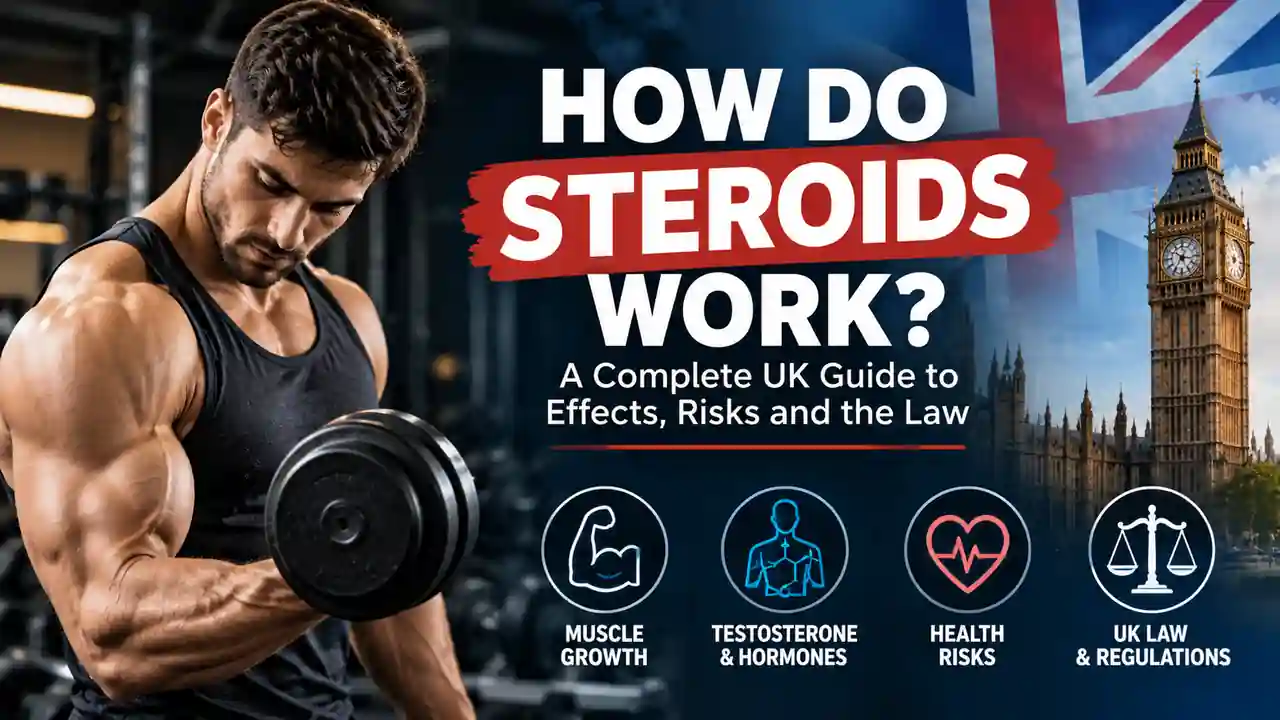
How Do Steroids Work? A Complete UK Guide to Effects, Risks and the Law
How do steroids work? Anabolic steroids mimic testosterone, binding to muscle cell receptors to boost protein synthesis and recovery. Results still depend on training, nutrition and genetics, and the health risks are real. This UK guide covers the science, common side effects, health checks and what UK law actually says.
If you have ever asked yourself how do steroids work, you
are in good company. Anabolic steroids are one of the most searched performance
topics in the UK, yet much of what appears online is either exaggerated or
leaves out the safety detail that matters most. Some sources overpromise
results, while others simply try to scare readers away.
This guide takes a clear, balanced approach. You will learn
what anabolic steroids are, how they act inside the body, what effects people
report, which side effects deserve serious attention and where UK law stands.
By the end, you will understand the science well enough to separate fact from
gym myth.
What Are Anabolic Steroids?
Anabolic steroids, formally known as anabolic androgenic
steroids, are synthetic compounds designed to imitate testosterone, the primary
male sex hormone. Both men and women produce testosterone naturally, although
men produce far larger amounts.
The name explains the function. "Anabolic"
describes the building of tissue, especially muscle and bone.
"Androgenic" describes the development of male characteristics, such
as a deeper voice, body hair and increased sex drive. Every anabolic steroid
carries a mix of both properties, and chemists have spent decades adjusting
molecules to shift that balance.
Anabolic steroids were originally developed for medical use.
Doctors have prescribed them to treat delayed puberty, muscle wasting caused by
serious illness and certain hormone deficiencies. Their use in sport and
bodybuilding came later, and it is this use that has made them controversial.
Anabolic Steroids vs Corticosteroids
People often confuse two very different drug families.
Corticosteroids, such as prednisolone and hydrocortisone, reduce inflammation
and are widely prescribed for asthma, eczema and arthritis. They do not build
muscle.
When fitness communities in the UK discuss steroids, they
mean anabolic steroids. Keeping this distinction clear matters, because the
effects, risks and legal status of the two groups are completely different.
How Do Anabolic Steroids Work in the Body?
To understand how anabolic steroids work, start with how
testosterone behaves. Your testes (or, in smaller amounts, ovaries and adrenal
glands) release testosterone into the bloodstream. It travels to tissues
containing androgen receptors, which are found in skeletal muscle, bone, skin,
hair follicles and the brain.
The process follows a few key stages:
- Receptor
binding. The steroid molecule passes through the cell wall and attaches to
an androgen receptor inside the cell.
- Gene activation.
The steroid and receptor travel together to the cell nucleus, where they switch
on genes responsible for building proteins.
- Increased
protein synthesis. Muscle cells assemble new protein at a faster rate,
which supports repair and growth after resistance training.
- Reduced muscle
breakdown. Some steroids also limit the effect of cortisol, a stress
hormone that encourages muscle tissue to break down.
- Improved
nitrogen retention. Muscle is roughly 16 percent nitrogen by protein
weight, and a positive nitrogen balance means the body is in a better state to
build tissue.
who trains hard and eats well.
Testosterone and Muscle Growth
The link between testosterone and muscle growth is one of
the best studied relationships in sports science. Testosterone increases muscle
protein synthesis, encourages satellite cells to join existing muscle fibres
and supports the growth of muscle fibre size. This is why men, who naturally
have higher levels, typically build muscle more easily than women.
Synthetic steroids are usually modified versions of the
testosterone molecule. These changes can make them last longer in the body,
make them easier to absorb or alter how strongly they affect muscle compared
with other tissues. Despite the differences, almost all of them work through
the same androgen receptor pathway described above.
What Effects Do People Report?
- People who use anabolic steroids commonly describe:
- Increases in lean muscle mass and strength
- Quicker recovery between training sessions
- Lower body fat when paired with a structured diet
- Greater training drive and, in some cases, increased aggression
- Higher red blood cell counts and improved endurance
These outcomes vary a great deal. Genetics, training age,
diet quality, the specific compound and individual response all change the
result. Gains made quickly can also fade once use stops, particularly if
training and nutrition slip.
Steroids Side Effects and Health Risks
Any honest explanation of how do steroids work has to cover
the downsides. Steroids side effects range from mild and temporary to serious
and permanent.
Hormonal suppression.
When the body detects external testosterone, it reduces its own production.
This can lead to smaller testicles, lower sperm count, reduced natural
testosterone and fertility problems. Natural production often recovers after
stopping, but this can take months, and in some people it never fully returns.
Cardiovascular
strain. Steroids can raise blood pressure, lower protective HDL
cholesterol, raise harmful LDL cholesterol and thicken the walls of the heart.
Over time, these changes increase the risk of heart disease and stroke.
Liver stress.
Certain oral steroids are processed through the liver and have been linked with
liver strain, and in some cases, serious liver damage.
Skin and hair
changes. Acne, oily skin and accelerated hair loss are common in people who
are genetically prone to them. Men may also develop gynaecomastia, which is the
growth of breast tissue.
Mental health
effects. Mood swings, irritability, anxiety and depression have been
reported, along with psychological dependence. Low mood after stopping can be
particularly severe.
Effects in women.
Women may experience a deepened voice, facial and body hair growth, menstrual
disruption and clitoral enlargement. Some of these changes are permanent.
Injection related
risks. Injecting any substance carries the risk of infection, abscesses
and, if equipment is shared, blood borne viruses.
Why Regular Health Checks Matter
Anyone using or considering anabolic steroids should treat
health monitoring as essential, not optional. Useful checks typically include
blood pressure, cholesterol, liver function, hormone levels, blood counts and
kidney function.
Being honest with a doctor can feel uncomfortable, but UK
medical professionals are there to protect your health, and many local drug
services run specialist clinics for people who use performance enhancing drugs.
These services offer testing, advice and sterile equipment without judgement.
Seek urgent medical help if you experience chest pain,
shortness of breath, severe mood changes, swelling in the legs, or yellowing of
the skin or eyes.
Are Steroids Legal in the UK?
The question of steroids UK law causes a lot of confusion,
so here is the general position:
- Anabolic steroids are Class C controlled drugs under the Misuse of Drugs Act 1971.
- Possessing them for personal use is not in itself a criminal offence.
- Supplying, producing or selling them to other people without lawful authority is an offence and can carry serious penalties.
- Anabolic steroids are also prescription only medicines, so supplying them without a valid prescription is restricted.
- Importing them can also create legal problems, depending on the circumstances.
The rules are detailed and can change, so always check
current guidance on GOV.UK or seek independent legal advice before acting. This
article is for general information only.
Common Myths About Steroids
"Steroids build
muscle without effort." They do not. Training and nutrition still
drive nearly all of the result.
"All steroids
are the same." Different compounds vary widely in strength, duration
and side effect profile.
"Side effects
only happen to heavy users." Individual sensitivity differs, and
problems can appear sooner than people expect.
"Natural
production always bounces back." It often does, but not always, and
recovery can take a long time.
Key Takeaways
- Anabolic steroids work by binding to androgen receptors
and increasing muscle protein synthesis.
- Training, nutrition and genetics strongly influence
results.
- Side effects can affect hormones, the heart, liver,
skin, fertility and mental health.
- Regular blood tests and honest medical advice reduce
risk.
- UK law treats personal possession very differently from
supply and sale.
Frequently Asked Questions
How do steroids work to build muscle?
They attach to androgen receptors in muscle cells and increase protein synthesis, which speeds up repair and growth after exercise.
Do steroids work without training?
Effects are much smaller without resistance training and proper nutrition. Steroids support the process but cannot replace it.
How long do steroids stay in the body?
It depends on the compound. Short acting forms can clear within days, while long acting forms may remain detectable for weeks or months.
Are steroids legal to buy in the UK?
They are Class C controlled drugs and prescription only medicines. Personal possession is not an offence, but supply and sale are. Check current official guidance.
Can steroid side effects be reversed?
Some, such as acne, often improve after stopping. Others, including voice changes in women or heart damage, may be permanent.
Who should avoid steroids completely?
People with heart conditions, liver disease, a history of hormone related cancers, fertility goals, or those under 18 should avoid them and speak to a doctor.